The question comes up in almost every conversation. A rancher from the Mini-Cassia area needs to move equipment between properties. A contractor in the Magic Valley is hauling a skid steer to job sites five days a week. A guy near Bear Lake just bought a side-by-side and needs something to get it to the trailhead. They all ask the same thing: should I go bumper pull or gooseneck? At Grizzly Trailer Sales, with locations in Rupert and Montpelier, we walk customers through this decision constantly, and the honest answer is that it depends on what you’re hauling, what you’re towing with, and how you plan to use the trailer once you get where you’re going.
Neither configuration is universally better. Each one does certain things well and certain things poorly, and matching the right hitch type to your actual use is what keeps you safe on Highway 93 and productive when you arrive.
How the Two Configurations Actually Differ
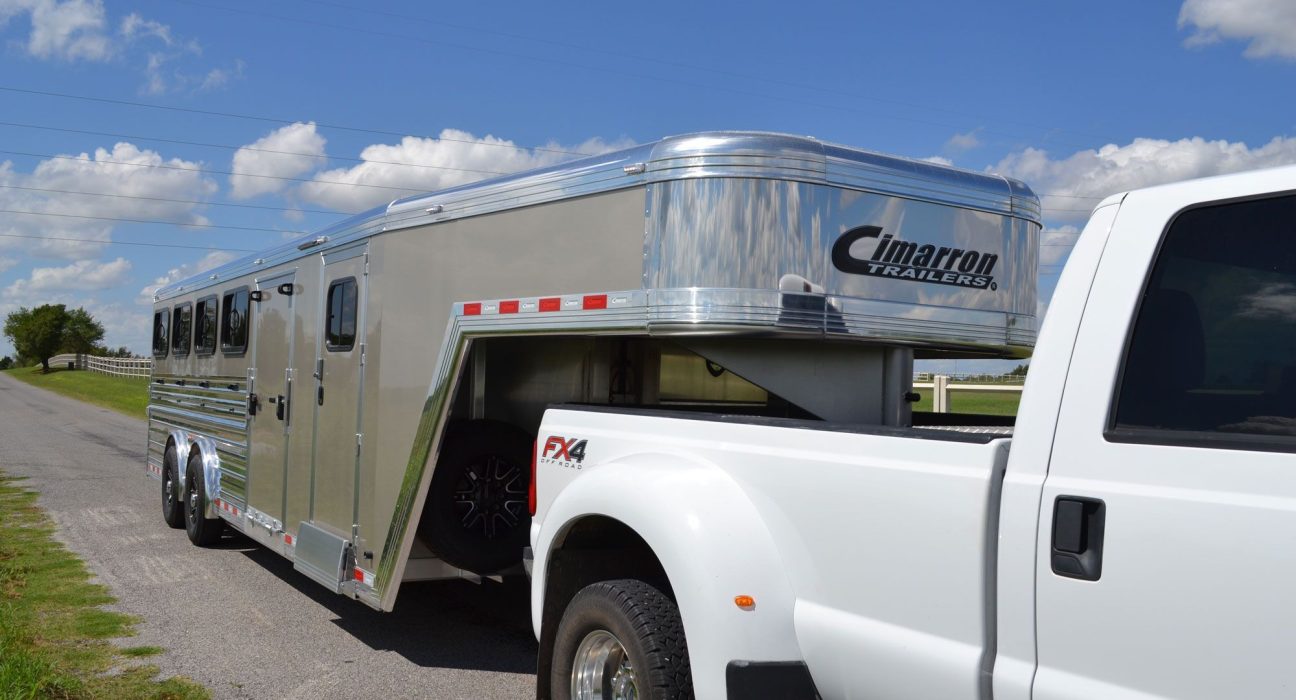
A bumper pull trailer connects to a ball hitch mounted on or near the rear bumper of the tow vehicle. The coupling point sits behind the rear axle of the truck, which means the trailer’s tongue weight is applied as a lever behind the truck’s rear wheels. A gooseneck trailer connects to a ball mounted in the bed of the truck, directly over or slightly ahead of the rear axle. The coupling point is between the truck’s axles rather than behind them.
That difference in hitch location changes everything about how the trailer handles, how much weight it can safely carry, and what kind of tow vehicle it requires.
With a bumper pull, the tongue weight acts as downward force behind the rear axle, which lightens the front end of the truck. At moderate tongue weights this effect is manageable, but as tongue weight increases, the front tires lose traction, steering becomes less responsive, and the trailer becomes more susceptible to sway, particularly in crosswinds on open stretches of highway through the Snake River Plain.
With a gooseneck, the tongue weight loads directly onto the rear axle, keeping the truck’s weight distribution more balanced and the front tires firmly planted. This is why gooseneck trailers can safely carry significantly more weight than bumper pulls of equivalent length. The coupling geometry also places the trailer’s pivot point further forward in the truck’s wheelbase, which reduces sway and improves turning response.
When a Bumper Pull Is the Right Choice
Bumper pull trailers are the right answer for a large percentage of Idaho hauling needs, and they’re the right answer for reasons that go beyond price, though they are generally less expensive than gooseneck equivalents.
Any trailer under about 10,000 lbs GVWR and 20 feet of deck length is well suited to a bumper pull configuration. That covers single and tandem-axle utility trailers, most ATV and UTV trailers, standard car haulers, enclosed cargo trailers up to about 8.5×20, and smaller dump trailers. If you’re loading two ATVs for a weekend in the South Hills, hauling a car to a swap meet in Twin Falls, or running a 6×12 enclosed trailer full of tools between job sites, a bumper pull handles the job without complication.
The tow vehicle requirement is more forgiving. Most half-ton pickups, and many midsize trucks and SUVs with adequate towing packages, can handle a bumper pull trailer within their rated capacity. You don’t need a bed-mounted hitch or a specific truck configuration. A standard 2-inch or 2-5/16 inch receiver hitch handles the connection, and the trailer can be hitched and unhitched quickly without climbing into the truck bed.
Maneuverability is another advantage. Bumper pull trailers are generally easier to back into tight spaces because the longer distance between the hitch point and the trailer axles gives the driver more room to correct before the angle becomes unrecoverable. For buyers who are new to towing or who need to navigate tight ranch yards, narrow driveways, or crowded trailhead parking areas, a bumper pull is more forgiving.
When a Gooseneck Becomes Necessary
The shift to a gooseneck happens when either the weight or the length of what you’re hauling exceeds what a bumper pull can safely manage. That transition point falls somewhere around 10,000 to 14,000 lbs GVWR for most applications, though the specific crossover depends on the tow vehicle, the terrain, and how far you’re hauling.
A rancher pulling a 24-foot deckover loaded with a tractor and implements is well past what a bumper pull should carry. A contractor hauling a 14,000-lb skid steer on a tilt-deck trailer needs the stability that a gooseneck provides on highways and on gravel county roads. A flatbed gooseneck carrying a stack of hay bales from the field to the feedlot handles the top-heavy load with a stability that a bumper pull of the same length simply can’t match.
The weight distribution advantage is the primary reason, but it’s not the only one. Gooseneck trailers of the same deck length have a tighter turning radius than their bumper pull equivalents because the hitch point is closer to the truck’s rear axle. On working ranches where you’re threading a loaded trailer through gates, between buildings, and along irrigation roads, the improved turning geometry matters on every trip.
The tradeoff is the tow vehicle requirement. A gooseneck requires a bed-mounted hitch, which means a full-size pickup, typically three-quarter-ton or one-ton, with a properly rated gooseneck ball installed in the bed. The truck loses some bed utility when the hitch is in place, though flip-ball and removable ball systems minimize this. The towing capacity of the truck must accommodate the higher GVWR of the trailer plus the load, and braking systems need to be matched to the heavier combined weight.
What Grizzly Trailer Sales Customers in Southern Idaho Typically Choose
The buying patterns at our Rupert and Montpelier locations reflect the practical realities of how southern Idaho customers use their trailers.
Recreational buyers, people hauling ATVs, UTVs, and side-by-sides to the backcountry around City of Rocks, the Albion Range, or the Caribou-Targhee trails near Montpelier, overwhelmingly choose bumper pull trailers. A 7×14 tandem-axle ATV trailer handles two full-size machines comfortably, tows behind a half-ton, and fits into Forest Service trailhead parking without difficulty. Echo and Eagle tilt-deck models are popular because the tilt loading eliminates ramp angles that can catch the undercarriage of low-clearance UTVs.
Ranchers and agricultural buyers split between the two based on what they’re moving. Smaller utility work like fence supplies, tools, and feed fits easily on a bumper pull. Moving tractors, implements, round bales, and livestock panels between properties pushes into gooseneck territory. Many working ranches in the Magic Valley and Bear Lake areas own one of each, using the bumper pull for daily utility and the gooseneck when the heavy equipment needs to move.
Contractors trend toward gooseneck configurations when their equipment exceeds the 10,000-lb threshold. A skid steer tilt trailer, which is one of the most common configurations we sell to contractors in the Burley, Rupert, and Twin Falls corridor, is typically a gooseneck because the combined weight of the trailer and a loaded skid steer pushes well past what a bumper pull can handle safely and legally.
The Weight Math You Need to Do Before You Buy
The most common mistake trailer buyers make is calculating capacity based on the trailer’s GVWR without accounting for the trailer’s own weight. A trailer rated at 10,000 lbs GVWR that weighs 2,500 lbs empty has a payload capacity of 7,500 lbs. If the machine you’re hauling weighs 8,000 lbs, that trailer isn’t rated for the job, regardless of whether it’s bumper pull or gooseneck.
Start with the weight of what you’re hauling. Add fuel, fluids, and any attachments or accessories that ride on the machine. Add the weight of any additional cargo you’ll put on the trailer (chains, binders, ramps, toolboxes). Compare that total to the trailer’s payload capacity, not its GVWR. Then confirm that your tow vehicle’s towing capacity and payload rating can handle the combined tongue weight and gross combined weight.
This math is where the gooseneck decision often gets made for the buyer. The load exceeds what any bumper pull trailer in the right length can safely carry, and the gooseneck is the only configuration that provides the GVWR and the towing stability the load requires.
The Right Trailer Is the One That Matches the Load
Bumper pulls are lighter, less expensive, more versatile across tow vehicles, and perfectly capable for loads under 10,000 lbs. Goosenecks are more stable, higher capacity, tighter turning, and necessary when the weight or length of the load demands it. Both are good trailers. The wrong choice is the one that doesn’t match what you’re actually hauling. Grizzly Trailer Sales carries bumper pull and gooseneck trailers across every category, from ATV and car hauler to deckover, dump, and skid steer tilt, at both our Rupert and Montpelier locations. Stop by either lot, tell us what you need to move and what you’re towing with, and we’ll walk you to the right trailer. That’s what we do.